
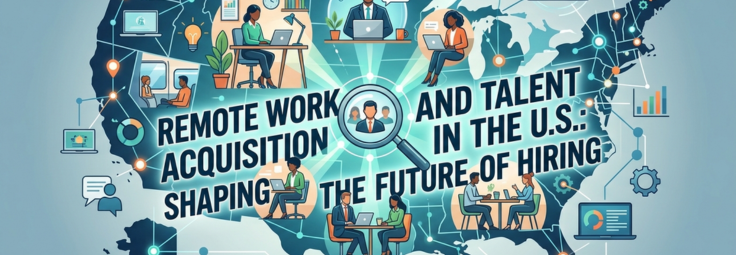
Introduction: The New Era of Work
The workplace landscape in the United States has changed dramatically over the last few years. What began as a pandemic-driven necessity has evolved into a long-term trend — remote work. For both employers and job seekers, this shift has opened new opportunities and new challenges.
As organizations adapt to this modern reality, talent acquisition strategies are evolving just as quickly. Hiring today means thinking beyond office walls, traditional schedules, and even state borders.
The Rise of Remote Work in America
Remote work isn’t just a perk anymore — it’s a fundamental part of the American workforce. According to recent surveys, over 35% of U.S. employees now work remotely at least part of the time. For many professionals, flexibility has become a top priority, even surpassing salary in importance.
Employers have also recognized the benefits: lower overhead costs, access to wider talent pools, and higher employee satisfaction. The result? A more connected, yet decentralized, working world.
How Remote Work Has Redefined Talent Acquisition
The shift to remote work has completely transformed how companies recruit. Instead of being limited to local candidates, businesses can now hire nationally or even globally.
However, this expansion requires smarter, tech-enabled recruiting strategies — ones that ensure cultural alignment, clear communication, and strong digital onboarding.
Recruiters now focus less on physical presence and more on skills, adaptability, and self-management — the traits that define successful remote employees.
Expanding the Talent Pool Across States
Remote hiring has erased geographic barriers. A company based in Texas can hire developers from California, marketers from Florida, or project managers from New York — all working seamlessly online.
This geographic freedom allows employers to tap into diverse talent, reduce regional wage disparities, and find the best fit for each role. It’s also helping smaller businesses compete with major corporations for top candidates.
Challenges in Remote Talent Acquisition
Despite the advantages, remote recruitment isn’t without its hurdles. Employers must navigate:
- Time zone differences are impacting collaboration.
- Compliance issues when hiring across state lines.
- Cultural alignment among distributed teams.
- Digital fatigue is affecting employee engagement.
To overcome these, companies are investing in better onboarding systems, stronger internal communication, and clear remote work policies that foster accountability and trust.
Technology at the Core of Remote Recruiting
Modern talent acquisition relies heavily on technology. AI-driven platforms, virtual interview tools, and automated background checks have become standard parts of the hiring process.
Recruiters now use data analytics to assess candidate fit and AI algorithms to identify skill matches faster. Additionally, video interviewing tools allow for more personal connections, even when teams are thousands of miles apart.
Technology not only streamlines the process but also ensures fairness and efficiency in hiring.
Building Company Culture Remotely
One of the biggest challenges in remote environments is maintaining a strong company culture. Without shared office spaces, businesses must be intentional about communication, engagement, and recognition.
Virtual team-building sessions, regular check-ins, and collaborative platforms like Slack or Microsoft Teams help maintain connection and belonging.
When employees feel connected to their company’s mission — even from afar — they stay motivated and loyal.
The Role of Employer Branding
In a digital-first hiring landscape, employer branding is more important than ever. Candidates research companies online before applying, evaluating their values, flexibility, and reputation.
Companies that showcase remote-friendly policies, diversity initiatives, and career growth opportunities attract top talent. Transparent communication about work-life balance and company culture builds trust from the start.
Remote Hiring and Diversity
Remote work has also fueled a positive trend: greater diversity and inclusion in hiring. By removing geographic limitations, companies can reach underrepresented talent from all backgrounds and locations.
This inclusivity drives innovation and creativity — key ingredients for success in modern organizations.
The Future of Hybrid Hiring
While remote work dominates many industries, hybrid models are becoming the sweet spot for others. Combining in-person collaboration with remote flexibility offers the best of both worlds.
Companies are redesigning office spaces for collaboration over attendance, ensuring that when employees come in, it’s for purpose-driven interaction rather than routine presence.
Preparing for the Next Phase of Talent Acquisition
As we move deeper into 2026, the future of work will be defined by adaptability. Talent acquisition leaders must stay ahead by:
- Leveraging AI and predictive analytics for smarter hiring.
- Focusing on employee well-being and engagement.
- Investing in training and upskilling for remote-ready skills.
- Maintaining inclusive, flexible work cultures that attract long-term talent.
Conclusion: A Future Without Boundaries
Remote work has forever changed the U.S. hiring landscape. It’s more than a trend — it’s a transformation in how people and businesses connect. For companies willing to adapt, the potential is limitless.
By embracing technology, diversity, and flexibility, employers can build stronger, happier teams ready to thrive in the digital-first world of work.
FAQs
- Why is remote work so popular in the U.S.?
Because it offers flexibility, better work-life balance, and expanded job opportunities for professionals across the country. - What are the main challenges of remote hiring?
Common challenges include time zone coordination, compliance across states, and maintaining company culture. - How does remote work improve diversity?
It removes geographic barriers, enabling companies to hire from different backgrounds, regions, and demographics. - What tools help with remote recruitment?
AI-powered recruiting software, video interviews, and digital onboarding systems are now essential for efficient hiring. - Is hybrid work the future?
Yes — many U.S. companies are moving toward hybrid models to balance flexibility with collaboration and connection.